|
|
-
- Photo courtesy of Glen Tepke
Blue-gray Tanager
Did you know?The Blue-gray Tanager frequents shade coffee plantations in Venezuela, Panama, Guatemala, and Mexico. This tropical tanager can be found foraging in mixed flocks with North American migratory birds.
Back to top
General DescriptionThe Blue-gray Tanager is a medium-sized songbird with a pale blue-gray head and underparts, a darker blue back, and bright blue wings and tail. Adult males are brighter than females and younger birds, which are darker and more gray. The bill is short and thick, with the upper jaw black and the lower jaw blue-gray. Back to top
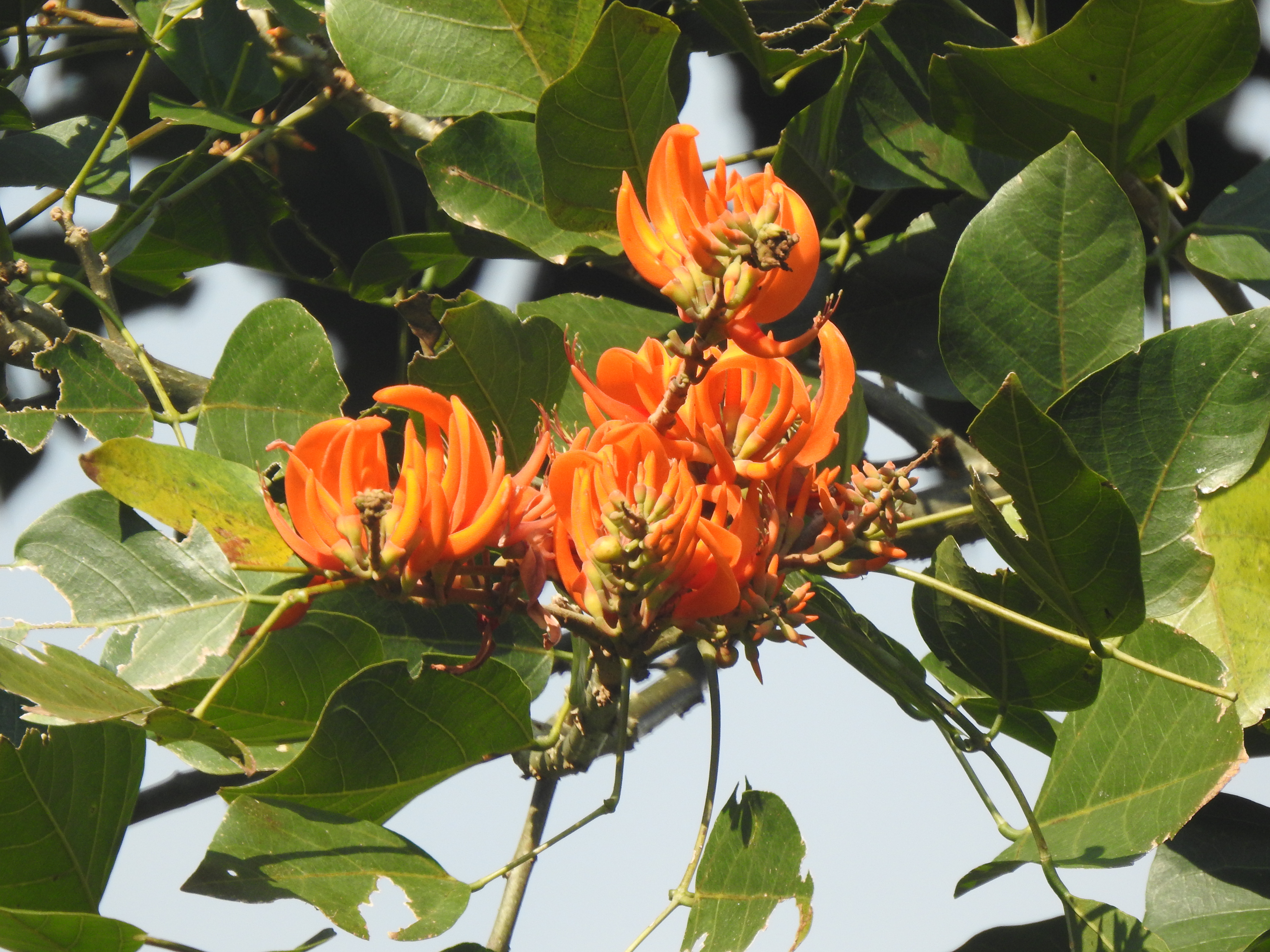
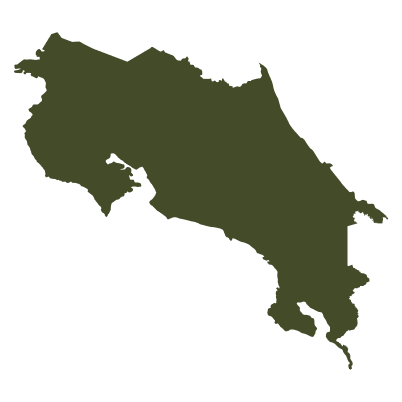
Habitat & MigrationBlue-gray Tanagers are neotropicalA tropical region south of the Tropic of Cancer in the western hemisphere, including southern Mexico, Central and South America. More... resident birds, native from Mexico to northeastern Bolivia and northern Brazil, and including Trinidad and Tobago. Blue-gray Tanagers forage and breed in open woodland areas, suburban gardens, town parks and plazas, forest edges, and second-growth forested areas. In forested areas, they inhabit the upper reaches of the canopy. They have also been found breeding in agricultural areas in Costa Rica and shaded cacao plantations in Panama. Blue-gray Tanagers have a varied diet, eating fruits, berries, seeds, leaves, insects, spiders, and nectar. They will drink nectar from balsaA fast-growing tree with lightweight wood sometimes found in shade coffee canopies. More... and ErythrinaA genus of flowering tropical trees used to provide shade in coffee plantations. Some shade coffee birds use Erythrina flowers and nectar. More... flowers and search for insects and spiders by examining the undersides of tree boughs, railings, electrical wires, and other horizontal objects. They are also seen at feeders. Back to top
The Coffee ConnectionBlue-gray Tanagers have been recorded on shade coffee plantations in Mexico, Guatemala, Nicaragua, Costa Rica, Panama, Venezuela, and Ecuador. In Venezuela, these birds were found in 67% of mixed-species flocks observed on shade coffee plantations; in the Venezuelan Andes, Blue-gray Tanagers were present on all seven shade coffee plantations monitored. Blue-gray Tanagers in Panama were seen in shade coffee habitat following ant swarms and foraging in large flocks among Erythrina trees. In a study done in Mexico, the Blue-gray Tanager was found on IngaFlowering tropical trees commonly used to provide shade in coffee plantations. Some shade coffee birds use Inga flowers and nectar. More... (planted) shade coffee plantations but not on rusticThe coffee-growing system in which the original tree layer is left intact and coffee bushes replace the original undergrowth. More... shade coffee plantations. In Costa Rica, this tanager was the most common neotropical resident species in coffee plantations. Additionally, a study in Costa Rica compared bird populations present in two types of managed shade coffee plantations: one was a shade coffee monocultureThe cultivation of a single crop, such as coffee, on a farm or in a region. Also may refer to the planting of one tree species to provide shade cover for a crop. More... plantation dominated by Erythrina, and the other was a commercial polyculturePolyculture is the practice of cultivating multiple crops in a given area, in an effort to imitate a natural ecosystem. In coffee polycultures, some of the natural forest is removed; the remaining trees and other plants provide shade and offer food and medicinal crops. More... plantation dominated by Erythrina and CordiaCordia alliodora is a harvestable timber tree sometimes grown as a shade tree for coffee and cacao plantations. More... trees. The polyculture plantation had more Blue-gray Tanagers as well as more diverse tree and non-tree plant species, including a greater number of epiphytes (such as orchids, ferns and lichens), and a taller canopy. In fact, these tanagers were one of a few species that were most representative of the more complex type of plantation. These results are similar to those from many other studies suggesting that many bird species prefer coffee plantations that sustain a more complex or diverse canopy. There is significant evidence that, at least in some areas, Blue-gray Tanagers seem to thrive in open areas, perhaps even preferring them to forested fragments. In Costa Rica, Blue-gray Tanagers were found nesting in abandoned sun coffeeCoffee grown without the cover of a forest canopy or planted shade. This usually requires intense management and chemical inputs. More... plantations, which had a sparse overstoryOften synonymous with "canopy", the uppermost layer in forest habitat. Also used to refer to very large trees that tower over the rainforest canopy. More... primarily consisting of Erythrina species; they were also found nesting in pastures, but not in primary forest. Because Blue-gray Tanagers are known to feed on Erythrina flowers, these flowers may play a role in attracting the tanager to these areas and to shade coffee plantations, where this tree is commonly planted. Back to top
Conservation StatusThe Blue-gray Tanager has been classified as "Least Concern" by the International Union for Conservation of NatureA global environment network which publishes a "Red List" indicating the conservation status of plants and animals. Status on the “Red List” increases from Least Concern to Near Threatened to Vulnerable to Endangered to Critically Endangered. More... (IUCN). Although global population trends for the Blue-gray Tanager have not been quantified, it has a large range and is known to be common in parts of it. This tanager appears to be fairly adaptable; it uses habitats varying between forest to shade coffee plantations and other 'countryside' habitats to open areas. It does not appear that this bird is under any immediate threat. Back to top
Bibliography
|
|
Bird Species on Record. 2008. Los Tarrales Reserve. Accessed: October 16, 2008 <Link>.
|
|
BirdLife International 2008. Pteroglossus torquatus. IUCN 2008. 2008 IUCN Red List of Threatened Species. Accessed: January 10, 2009. <Link>.
|
|
BirdLife International 2008. Thraupis episcopus. The IUCN Red List of Threatened Species. 2008. Accessed: November 22, 2008 <Link>.
|
|
Canaday, Christopher. 1997. "Loss of insectivorous birds along a gradient of human impact in Amazonia." Biological Conservation 77: 63-77.
|
|
Christian, Daniel; Williams, Alan; Roberts, Dina; Pomara, Lars. 2003. Finca Hartmann - Panama, Bird List. Accessed: October 26, 2008 <Link>.
|
|
Daily, Gretchen C.; Ehrlich, Paul R.; Sanchez-Azofeifa, G. Arturo . 2001. "Countryside biogeography: Use of human-dominated habitats by the avifauna of southern Costa Rica." Ecological Applications, 11(1): 1-13.
|
|
Florian, Elena; Benjamin, Tamara; Finegan, Bryan; Harvey, Celia A.; Soto, Gabriela. 2008. "The effect of structural complexity and landscape context in the avifauna of coffee agroforestry systems / Efecto de la complejidad estructural y el contexto paisajistico en la avifauna de sistemas agroforestales cafetaleros." Ornitologia Neotropical, 19 (Suppl): 541-548.
|
|
Greenberg, R.; Bichier, P.; Sterling, J. 1997. "Bird populations in rustic and planted shade coffee plantations of eastern Chiapas, México." Biotrópica, 29(4): 501-514.
|
|
Hughs, Jennifer B.; Daily, Gretchen C.; Erlich, Paul R. 2002. "Conservation of tropical forest birds in countryside habitats." Ecology Letters, 5: 121-129.
|
|
Jaramillo, Alvaro. 2007. Guatemala Shade Grown Birding Trip List. Field Guides Birding Tours Worldwide. Accessed: October 26, 2008 <Link>.
|
|
Jones, Jason; Perazzi, Paulo Ramoni; Carruthers, Erin H.; Robertson, Raleigh J. 2000. "Sociality and foraging behavior of the Cerulean Warbler in Venezuelan shade-coffee plantations." The Condor, 102: 958-962.
|
|
Jones, Jason; Ramoni-Perazzi, Paolo; Carruthers, Erin H.; Robertson, Raleigh J. 2002. "Species composition of bird communities in shade coffee plantations in the Venezuelan Andes." Ornitologia Neotropical, 13: 397-412.
|
|
Lindell, C.; Smith, M. 2003. "Nesting bird species in sun coffee, pasture, and understory forest in southern Costa Rica." Biodiversity and Conservation, 12: 423-440.
|
|
Petit, Lisa J.; Petit, Daniel R.; Christian, Daniel G.; and Powell, Hugh D.W. 1999. Bird communities of natural and modified habitats in Panama. Ecography, 22(5): 292-304.
|
|
Roberts, Dina L.; Cooper, Robert J.; Petit, Lisa J. 2000. "Flock characteristics of ant-following birds in premontane moist forest and coffee agroecosystems." Ecological Applications, 10(5): 1414-1425.
|
|
Stiles, Gary F.; Skutch, Alexander F. 1989. A Guide to the Birds of Costa Rica. Ithaca: Cornell University Press.
|
|
Tejada-Cruz, C.; Sutherland, W.J. 2004. "Bird responses to shade coffee production." Animal Conservation, 7: 169-179.
|
|
Van Bael, Sunshine A.; Bichier, Peter; Ochoa, Isis; Greenberg, Russell. 2007. "Bird diversity in cacao farms and forest fragments in western Panama." Biodiversity and Conservation, 16: 2245-2256.
|
|
|
|