-
- Photo courtesy of Greg Lavaty
Ruby-throated Hummingbird
Did you know?
Ruby-throated Hummingbirds make their strenuous 800-mile winter migration non-stop across the Gulf of Mexico. Upon arrival, the hummingbirds use the flowers of various shade trees in coffee plantations as important winter food staples.
Back to top
General Description
The Ruby-throated Hummingbird is a small hummingbird that owes its name to the male's brilliant metallic-red throat feathers called a gorget. Both sexes have golden-green or greenish-bronze upper parts. The female lacks the red gorget, having instead a light-colored, almost white, throat. The Ruby-throated Hummingbird is closely related to the Black-chinned Hummingbird of the western United States, which is very similar in appearance except for its dark purple gorget. Like most hummingbirds, the "Ruby-throat" is highly territorial during breeding season. Vocalization consists of rapid, squeaky chipping, which is mainly used to defend territory or food sources. The birds are usually quiet during the non-breeding season.
Back to top
Habitat & Migration
Although more than a dozen hummingbird species occur in the western United States, the Ruby-throated Hummingbird is the only hummingbird that breeds across a wide area of eastern North America. The western boundary of its range corresponds very closely with the edge of the eastern deciduous forest-roughly western Minnesota south to eastern Texas. Breeding habitat includes deciduous forest, woodland edges, gardens, and orchards. These hummingbirds also nest in the pine forest of the Southeast. Main food sources include floral nectar, insects, and sap from the wells of the Yellow-bellied Sapsucker when food is scarce.
The Ruby-throated Hummingbird spends its non-breeding months wintering in southern Mexico and Central America. A small but increasing number of birds winter in North America along the upper Gulf Coast. Hummingbird feeders and exotic plants used by residents to attract the hummingbirds may account for this trend. Non-breeding habitat is varied and includes tropical deciduous forest, shade coffee plantations, tropical dry forest, citrus groves, and flowering hedgerows.
In preparation for fall migration, Ruby-throated Hummingbirds feed intensively on nectar and insects, often doubling their weight in 7-10 days. The number of migrants noted along the Gulf Coast peaks in late August as the birds prepare for the long flight across the gulf or along the coastline. The heavily fattened birds commonly depart in late afternoon, climbing at a steep angle in a slow, labored ascent until the birds are no longer visible. In the spring, male migrants begin arriving along the northern gulf coast in mid-February, followed by the females 8-10 days later. The birds work their way north over the next two months, arriving in Vermont by the first week in May. Little is known about the northward migration patterns, although large numbers of the birds have been observed flying low over the wave tops just prior to their arrival on the Gulf Coast, where they feed heavily on Japanese honeysuckle and other nectar-producing plants.
Back to top
The Coffee Connection
Ruby-throated Hummingbirds are regularly observed in various types of shade coffee habitat in Mexico, Guatemala, and El Salvador. In western Chiapas, Mexico, they were observed specifically in rusticThe coffee-growing system in which the original tree layer is left intact and coffee bushes replace the original undergrowth.
More... shade coffee plantations (where coffee plants are cultivated under a natural forest canopy). Interestingly, "Ruby-throats" were much more common in these rustic plantations than natural (non coffee-producing) forests studied in the same region, perhaps suggesting that the forest canopy over these rustic coffee farms provides food sources not found in the natural forest habitat. In southeastern Chiapas, Mexico, another study of seven different shade coffee farms ranging from rustic coffee to commercial polyculturePolyculture is the practice of cultivating multiple crops in a given area, in an effort to imitate a natural ecosystem. In coffee polycultures, some of the natural forest is removed; the remaining trees and other plants provide shade and offer food and medicinal crops.
More... to shaded monocultureThe cultivation of a single crop, such as coffee, on a farm or in a region. Also may refer to the planting of one tree species to provide shade cover for a crop.
More... found these hummingbirds in all but one of the farms, and the author noted that the bird was probably present there as well, but was overlooked.
Typical of most hummingbirds, this bird is classified as a nectar-feeding species. Flowering trees such as IngaFlowering tropical trees commonly used to provide shade in coffee plantations. Some shade coffee birds use Inga flowers and nectar.
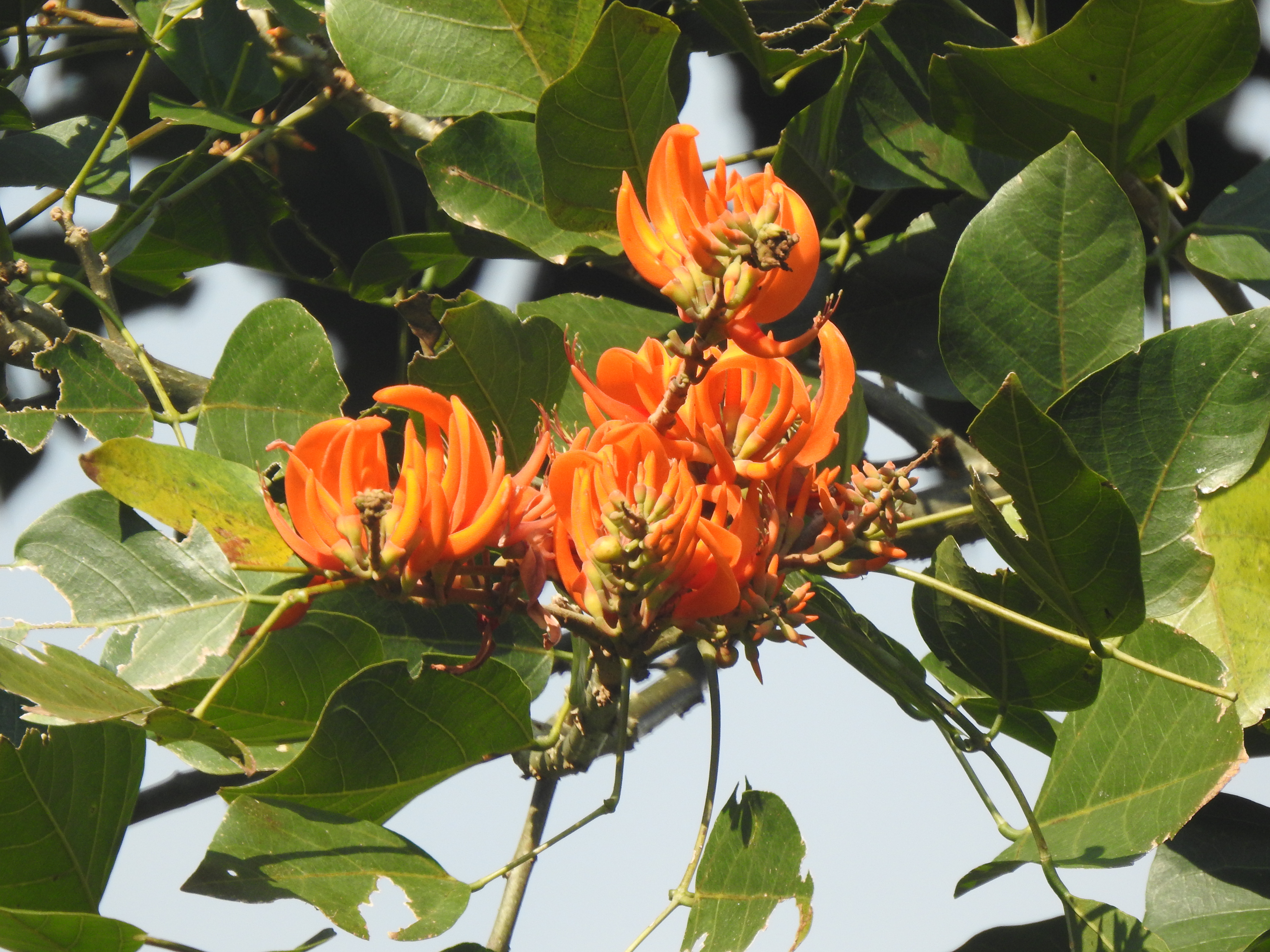
More..., ErythrinaA genus of flowering tropical trees used to provide shade in coffee plantations. Some shade coffee birds use Erythrina flowers and nectar.
More... and GliricidiaFlowering, deciduous tropical trees used to provide shade in coffee plantations. Some shade coffee birds use Gliricidia flowers and nectar.
More... are commonly cultivated on shade coffee plantations that range from limited to diverse shade. Several hummingbird species inhabit these managed forests, and Ruby-throated hummingbirds regularly feed on the flower nectar from these common shade trees. In Guatemala in the early season (January-February, before the hummingbirds' early migration north), the "Ruby-throat" was a common bird in shade coffee plantations dominated by Gliricidia but not on plantations dominated by Inga. The sequential blooming cycles of flowering trees in shade coffee forests may explain why and when the Ruby-throated Hummingbird forages in a wide variety of shade coffee habitats. Gliricidia shade trees flower in January and then lose their leaves, while two common Inga tree species produce a profusion of flowers from mid-March on.
In contrast to their well-documented use of various types of shade coffee, Ruby-throated Hummingbirds appear to be absent from sun coffeeCoffee grown without the cover of a forest canopy or planted shade. This usually requires intense management and chemical inputs.
More... plantations. A major study documenting habitat preferences of the Ruby-throated Hummingbird and nine other hummingbird species found none using sun coffee habitat.
Another factor which may influence the Ruby-throated Hummingbird's choice of habitat and food sources is their subordinate status to other hummingbird species on their non-breeding range. When larger hummingbirds dominate the best food sources, the Ruby-throated Hummingbird may be forced to feed elsewhere.
Back to top
Conservation Status
At present, the Ruby-throated Hummingbird is not threatened in any part of its range. The International Union for Conservation of NatureA global environment network which publishes a "Red List" indicating the conservation status of plants and animals. Status on the “Red List” increases from Least Concern to Near Threatened to Vulnerable to Endangered to Critically Endangered.
More... (IUCN) lists the global conservation status of this hummingbird as "Least Concern." Data from the North American Breeding Bird Survey indicate consistent increases in the Ruby-throated Hummingbird population since 1966.
Maintaining adequate food sources to support the energy-intensive migration of the Ruby-throated Hummingbird may prove to be a conservation priority for this bird. To ensure their survival, it is imperative that the tiny birds be able to find adequate sources of food throughout their migration corridor and at their wintering grounds. Although more study of this topic is needed, widespread replacement of shade coffee habitat with sun coffee could result in a decline of the Ruby-throated Hummingbird and other hummingbird populations.
Back to top
Bibliography
|
|
BirdLife International 2008. Archilochus colubris. In: IUCN 2008. 2008 IUCN Red List of Threatened Species. Accessed: December 1, 2008 <Link>.
|
|
Cooper, Daniel S. 2006. Ecological assessment of seven coffee farms in the Soconusco Region of southeastern Chiapas, Mexico. Pasadena, CA: Cooper Ecological Monitoring, Inc. Accessed: November 22, 2008 <Link>.
|
|
Greenberg, R.; Bichier, P.; Sterling, J. 1997. "Bird populations in rustic and planted shade coffee plantations of eastern Chiapas, México." Biotrópica, 29(4): 501-514.
|
|
Greenberg, R.; Bichier, Peter; Angon, Andrea Cruz; Reitsma, Robert. 1997. "Bird populations in shade and sun coffee plantations in central Guatemala." Conservation Biology, 11(2): 448-459.
|
|
Komar, Oliver. 2006. "Ecology and conservation of birds in coffee plantations: a critical review." Bird Conservation International. Vol 16: 1-23.
|
|
NatureServe. 2008. Accessed: October 26, 2008 <Link>.
|
|
Robinson, T. R.; Sargent, R. R.; Sargent, M. B. 1996. Ruby-throated Hummingbird (Archilochus colubris). In: The Birds of North America Online. Poole, A., editor. Ithaca: Cornell Lab of Ornithology. Accessed: October 27, 2008 <Link>.
|
|
Sauer, J. R.; Hines, J. E.; Fallon, J. Version 5.15.2008. Breeding Birds Survey, Results and Analysis 1966 - 2007. USGS Patuxent Wildlife Research Center, Laurel, MD. Accessed: October 27, 2008 <Link>.
|
|
Tejada-Cruz, C.; Sutherland, W.J. 2004. "Bird responses to shade coffee production." Animal Conservation, 7: 169-179.
|
|
|