Shade Coffee Bird Atlas - Glossary  

Andes
The South American mountain chain that runs from Tierra del Fuego in the south to Panama in the north, generally parallel to the continent's west coast. Crops grown in the Andes for export include tobacco, cotton, and coffee. More than 1,700 species of birds make their home in these mountains at least part of the year.
   
Audubon Watch List
Developed by National Audubon Society and the American Bird Conservancy, this tool lists 176 bird species in the continental U.S. and 38 in Hawaii that are in need of immediate conservation help. Last updated in December, 2007, the list uses color-coding to identify species of global concern (red) and species of national concern (yellow). Find the WatchList at http://www.audubon.org/bird/watch/
   
Balsa   
A fast-growing tree native to tropical areas of South America north to Mexico. The wood from this tree is very lightweight and soft. This species, Ochroma pyramidale, is one found in shade coffee canopies.
   
canopy The uppermost layer in forest habitat, comprised of multiple tree species. In a shade coffee plantation, these trees provide shade for coffee plants, and habitat for birds, bats, and other organisms.
   
cardamom An herb (Elettaria cardamomum) native to India that is used in Indian cooking and to flavor Arabic coffee. Cardamom and coffee are grown under similar climatic and soil conditions, and have been intercropped. Like coffee, cardamom thrives as a shaded understory plant. Neotropical migrants such as the Cerulean Warbler and Western Tanager have been found in the canopies of rustic cardamom plantations.
   Back to top
Christmas bird count
Annual survey organized by the National Audubon Society in which thousands of volunteers conduct a bird census between mid-December and early January. Data collected are used to study bird population trends in North America.
   
coffee berry borer
A widespread pest that causes extensive, and expensive, damage to coffee plantations. A member of the Coleoptera family, Hypothenemus hampei causes an estimated annual loss of 500 million dollars. Some birds provide benefit to coffee plantations by eating this beetle.
   
Cordia Cordia alliodora is a harvestable timber tree sometimes grown as a shade tree for coffee and cacao plantations.
   
deciduous A tree or shrub that sheds its leaves at the end of each growing season.
   
epiphyte

A group of plants that grows on other plants - usually trees - rather than in the ground. They include species of orchids, ferns, bromeliads, and lichen. As non-parasitic plants, epiphytes do not take resources directly from the plant they live on.In tropical regions, epiphytes growing in forest canopies are used by neotropical birds for nesting, water, and food. Some coffee farmers remove ephiphytes because they believe that the epiphytes may harm trees and that a more open canopy improves coffee yield. However, plantations with more ephiphytes have more insects (arthropods), more canopy cover, and are preferred by several bird species.

   
Erythrina
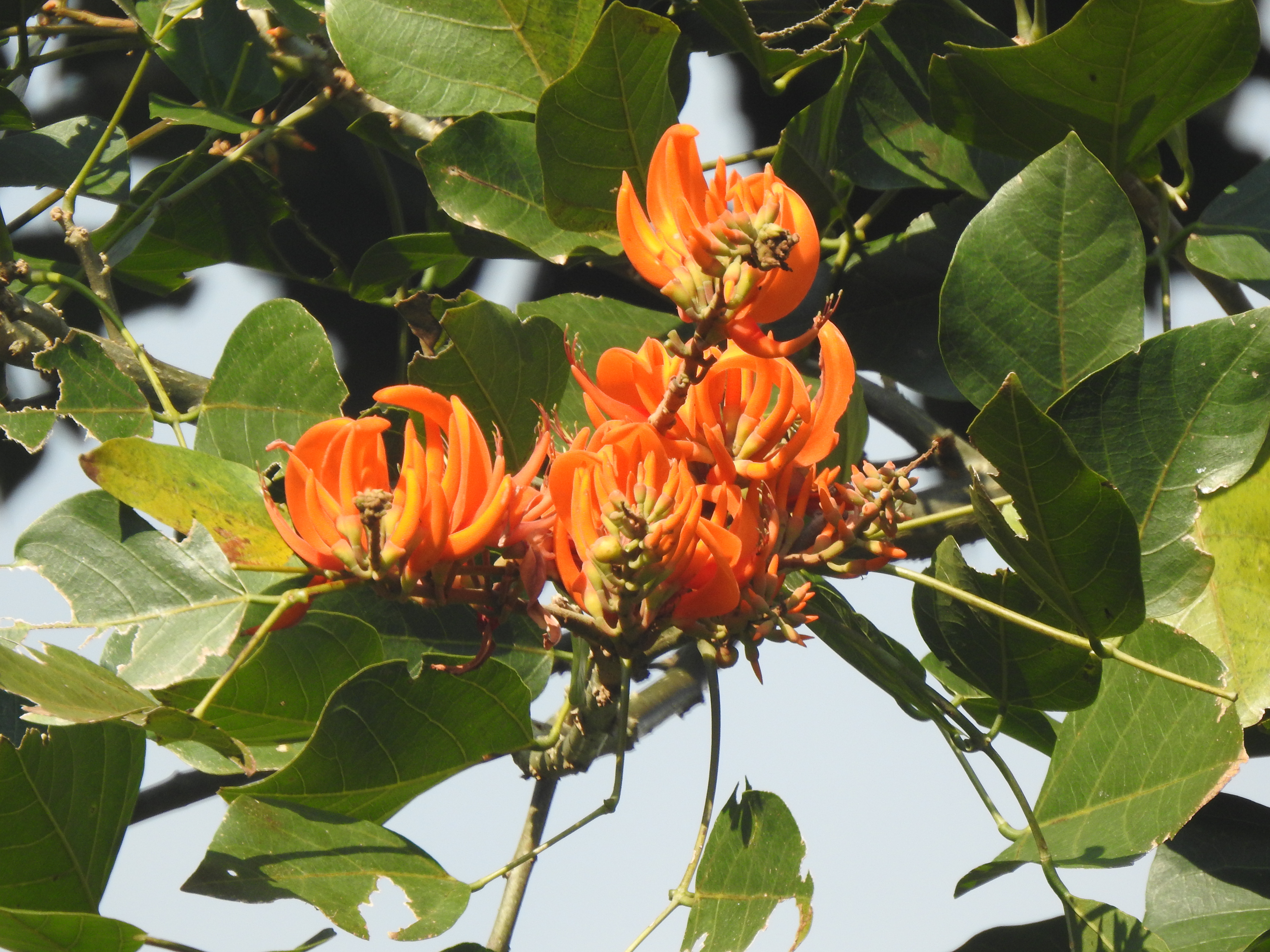
A large genus of flowering, leguminous, tropical or subtropical trees used to provide shade in coffee plantations and as living fence posts. Its flowers and pollen are also known to provide a food source for a number of birds. One of the most common trees of this genus used on shade coffee plantations is Erythrina poeppigiana.
 
Gliricidia A medium-sized deciduous, leguminous tree used to provide shade in coffee farms. Its native range is the semi-humid lowlands of the Pacific coasts of Mexico and Central America, but it has been introduced in the neotropics for various uses: shade, living fencing, and fuel wood. It is fast growing and propagates swiftly. Planted Gliricidia may provide some resources for birds visiting shade coffee plantations, especially when its bright flowers are in bloom.
   Back to top
Important Bird Area program The Important Bird Areas Program (IBA) is a global effort by the National Audubon Society and partner organizations to identify and conserve vital areas for biodiversity, with a focus on preserving critical habitat for birds. This program makes an effort to minimize the effects that habitat loss and degradation have on birds and other wildlife. Learn more about the IBA Program at www.audubon.org/bird/iba.
   
Inga A large genus of leguminous trees native to the Central and South American tropics. Inga edulis, the best known of the Inga species, is popular with agro-foresters for its rapid growth. Inga has been used as a shade tree for perennial crops - mainly coffee, cacao, and tea, especially in Central America - since the beginning of the nineteenth century. Some shade coffee birds use resources from Inga trees, particularly flowers and nectar.
   
International Union for Conservation of Nature
IUCN is the world’s oldest and largest global environmental network. The IUCN publishes the “IUCN Red List” which is the world's most complete inventory of the global conservation status of plant and animal species. The aim of the Red List is to relate the urgency and scale of conservation problems to the public and to policy-makers, and motivate the global community to reduce species extinctions. A species' status on the “Red List” increases from Least Concern to Near Threatened to Vulnerable to Endangered to Critically Endangered.
   
monoculture The cultivation of a single crop on a farm or in a region. Sun-grown coffee is an example of monoculture, where all the trees and vegetation are removed and coffee is the only crop cultivated. The term is also used to describe shade monoculture, in which one tree species is planted to provide shade to coffee plants or other crops.
   
montane A biogeographic term which refers to highland areas located below the subalpine zone. Montane regions generally have cooler temperatures and often have higher rainfall than the adjacent lowland regions, and they are frequently home to distinct and broadly diverse communities of plants and animals, including neotropical migratory birds. Coffee originated in Ethiopia's montane rainforest.
   Back to top
Neotropics

A tropical biogeographic region south of the Tropic of Cancer in the western hemisphere, including southern Mexico, Central and South America. Neotropical migratory birds breed in North America and spend the non-breeding season south of the tropic of Cancer. Neotropical resident birds breed and remain in this region year-round.

   
overstory  Depending on context, the overstory is synonymous with the canopy, the uppermost layer in forest habitat. This term is also used to refer to very large trees that tower over the rainforest canopy. In a shade coffee plantation, the overstory provides shade for coffee plants, and habitat for birds, bats, and other organisms.
   
polyculture Polyculture is the agricultural practice of cultivating multiple distinct crops in a given area, in an effort to imitate a natural ecosystem. In coffee production, polyculture involves removal of some of the natural forest but still integrates various types and ages of trees and other plants that produce fruit, vegetables, nuts, and medicines. These additional crops increase species diversity and can provide farmers with a natural insurance when coffee prices are depressed. Coffee production can be categorized in terms of management intensity; the higher the management intensity, the less the system resembles a natural forest; sun coffee requires the most intensive management, followed by specialized (reduced) shade, commercial polyculture, traditional polyculture, and finally rustic coffee, which most closely replicates natural forest. Whereas in a rustic coffee plantation, the natural tree canopy remains intact, a traditional polyculture is managed so that some of the natural canopy is removed but other tree species are also added to increase productivity. Commercial polyculture systems generally support fewer species types and fewer total species than in traditional polyculture.
 
remnant A patch of forest left after the area has been cleared for other purposes.  A forest remnant usually cannot provide all the same services as a forest, but it offers some shelter, food, and stopover habitat for wildlife.
   
riparian Moist habitats with trees and shrubs along streams and rivers.
   
rustic Refers to a coffee-growing system in which the original tree layer is left intact and coffee bushes replace the original undergrowth. Farmers must manage rustic coffee production in order to maintain effective coffee production levels, so shade trees are generally thinned and trimmed in order to balance humidity and light for the coffee and other plants. Thus rustic coffee plantations are not entirely natural, undisturbed forest systems, though they do provide an excellent alternative for birds and other wildlife where natural forest has already been altered.
   
shade coffee
Also "shade-grown coffee"; coffee grown under a canopy of diverse species of trees. Shade coffee farms cover a wide spectrum, ranging from rustic (least management) to traditional polyculture to commercial polyculture to monoculture (most management). As management intensity increases, ecological diversity tends to decrease. Shade coffee production involves agroforestry, or integrating crops into forested areas; in contrast, "sun coffee" is grown without shade trees.
   
subspecies
A taxonomic division of a species with its own unique characteristics, usually arising from geographic separation or isolation. For example, there are three subspecies of the Yellow Warbler: Mangrove, Golden, and Yellow Warbler.
   
sun coffee
Also "sun-grown" or "technified" coffee; coffee grown without the cover of a forest canopy or planted shade. Sun coffee farms require intense management and significant chemical inputs; generally sun coffee farms produce high yields.
   Back to top